
From EC to Image: The Bloody, Brilliant Evolution of Horror Comics
The Origins of Horror in Ink and Panels
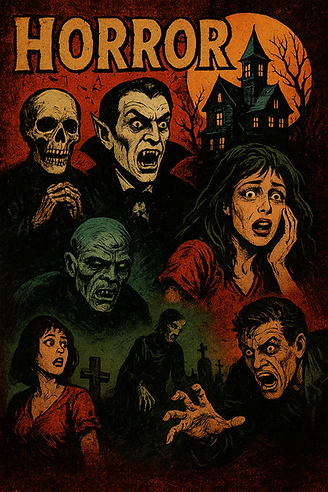
Before Freddy Krueger, before The Exorcist, before Stephen King ruled the nightmares of readers, there were comics. And not just superhero comics, either. The roots of horror in comics stretch back to the 1940s and 1950s, when lurid, blood-soaked stories leapt off newsstands and into the nightmares of readers everywhere.
The crown jewel of that era? EC Comics. Titles like Tales from the Crypt, The Vault of Horror, and The Haunt of Fear were gruesome, gory, and deliciously ironic. Each issue featured twisted morality tales, greedy men eaten by their victims, cheating lovers torn apart by monsters, and villains punished in poetic fashion.
But their success came at a cost. Parents and politicians accused horror comics of corrupting America’s youth. This led to the 1954 Senate Subcommittee on Juvenile Delinquency, a moral panic that gave birth to the Comics Code Authority. With one stroke of bureaucratic ink, horror was exiled from mainstream comics for decades.
The Long, Dark Silence
In the years that followed, horror comics went underground. The genre survived in strange corners, fanzines, independent presses, and underground comix that ignored the censorship rules.
Still, the Code’s shadow lingered. Mainstream publishers avoided blood, death, and the supernatural entirely. It wasn’t until the 1970s that horror clawed its way back to the surface. Marvel and DC tentatively revived monsters with Tomb of Dracula, Werewolf by Night, and Swamp Thing.
Those series mixed Gothic horror with superhero energy, creating complex antiheroes who blurred the line between monster and man. Swamp Thing, especially under Alan Moore’s later direction, became one of the most literary and philosophical horror comics ever made, a meditation on nature, death, and identity disguised as a creature feature.
The Horror Renaissance: Blood in Full Color
Fast forward to the 1980s and 1990s, and horror comics were reborn in glorious, gruesome fashion. Freed from the Comics Code’s grip and driven by the rise of indie publishers, creators began pushing boundaries again.
Companies like Dark Horse, IDW, and Image Comics embraced the grotesque, the weird, and the psychological. The horror comic became a respected art form again—intelligent, shocking, and fearless.
Some highlights from the era and beyond:
Clive Barker’s Books of Blood – Barker’s short stories found graphic form, bringing literary horror to comic shelves.
Neil Gaiman’s Sandman – A genre-defying masterpiece blending mythology, Gothic horror, and dark fantasy.
30 Days of Night (Steve Niles & Ben Templesmith) – A cold, vicious vampire story that revitalized the genre for the modern age.
The Walking Dead (Robert Kirkman) – The zombie apocalypse saga that took over pop culture and redefined serialized horror storytelling.
Each of these series proved that comics could be just as horrifying, and emotionally devastating, as any novel or film.
The Digital Age: Horror for Every Kind of Fan
In the modern era, horror comics are thriving like never before. The internet has made it easier than ever for creators to reach readers, leading to an explosion of webcomics and digital horror anthologies.
From creepy creepypasta-inspired panels to elegant graphic novels, the modern horror comic reflects the anxieties of the age: technology, surveillance, loneliness, and disinformation.
Today’s standout creators continue to innovate:
Something is Killing the Children (Boom! Studios) – A dark, bloody fairy tale about monsters that only children can see.
The Nice House on the Lake (DC Black Label) – A blend of psychological terror and existential dread about friends trapped by an alien “savior.”
Ice Cream Man (Image Comics) – An anthology that mixes surreal horror with commentary on grief, addiction, and cosmic chaos.
The art has evolved too, modern horror comics use minimalist design, painterly styles, and cinematic pacing to unsettle readers. Instead of just showing blood, they build dread through silence, structure, and suggestion.
Why Horror Works So Well in Comics
There’s something uniquely terrifying about horror in sequential art. Unlike movies, which control timing and sound, comics leave the rhythm of fear to the reader. You decide when to turn the page, and sometimes, that’s the scariest moment of all.
A good horror comic weaponizes this control. A lingering panel, a splash page of horror revealed after a quiet build-up, comics turn pacing into terror.
Artists like Junji Ito, whose works (Uzumaki, Tomie, The Enigma of Amigara Fault) have achieved cult status worldwide, use this technique masterfully. His horror doesn’t just come from monsters, it comes from impossible geometry, human obsession, and the slow realization that something is deeply wrong with the world.
Horror Comics: Past, Present, and Future
The history of horror comics is a cycle of repression and resurrection, each generation rediscovering how powerful fear on the page can be. What began as gory pulp entertainment has evolved into some of the most intelligent, haunting storytelling in any medium.
From the darkly humorous crypt keepers of EC Comics to the existential nightmares of modern graphic novels, horror comics remain mirrors of their time. In the 1950s, they reflected anxieties about morality and punishment. In the 1980s, they echoed fears of nuclear annihilation and social decay. Today, they explore isolation, technology, and the fragility of reality itself.
And that’s why horror comics endure. They speak to the primal part of us that knows fear never really dies, it just changes shape, waiting in the dark margins of the next issue.
Final Thoughts
If you haven’t yet dived into the inky abyss of horror comics, now’s the time. Whether you crave vintage chills like Tales from the Crypt, cerebral nightmares like Sandman, or modern masterpieces like The Nice House on the Lake, there’s a dark panel waiting for you.
Because in comics; just like in nightmares, the scariest thing is always just one page away.
My latest novel is coming October 31, and it is a sequel to my novel DEVOURED - Order The Witch of November now.
Or you can get my latest short story - Apollo - today.
Or you can visit my online bookstore and see all of my work in all genres in one place.


Comments